
Introduction: Transforming Curiosity into Capability
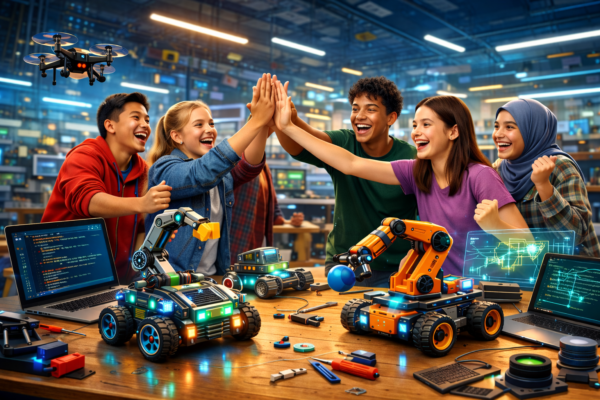
Imagine a space where a child’s curiosity sparks innovation, where questions lead to creation, and where every experiment builds not just robots — but thinkers, problem-solvers, and future technologists.
That’s what modern robotics education does.
In a world powered by automation, artificial intelligence, and smart machines, robotics isn’t just about playing with robots — it’s about understanding how technologies work and how students can shape the world of tomorrow with them.
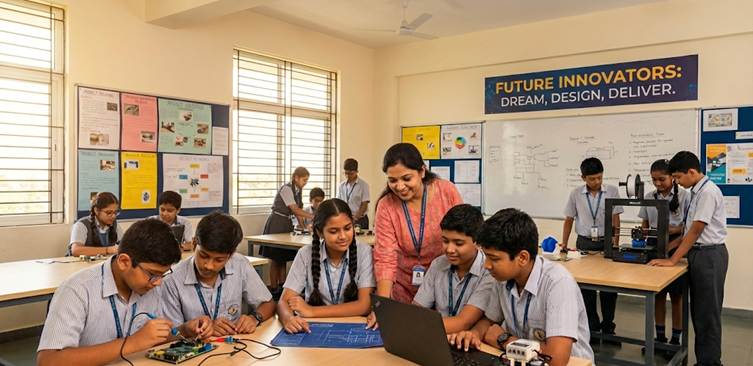
The Wonder Minds’ Robotics Program is designed to do exactly that — helping students build, code, and innovate while gaining real-world skills that extend far beyond the classroom.
What Is the Robotics Program at The Wonder Minds?
A Hands-On STEM Learning Experience
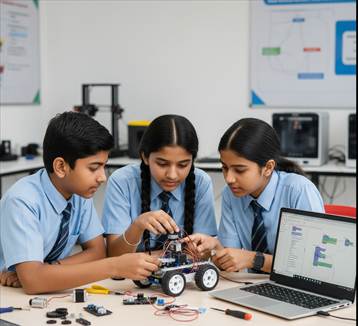
The Wonder Minds’ robotics curriculum invites learners to:
- Design and build robots from scratch, using modern kits and components
- Learn coding and AI logic so robots can navigate, sense, and interact
- Participate in challenges and creative problem solving that inspire innovation
This is experiential STEM education, where students learn by doing, not just consuming information. Every project is built around real-world engineering principles — giving learners a taste of how technology works and how it’s applied in industries today.
How the Program Works: A Step-by-Step Exploration
Grades K–5: Foundational Learning
- Visual programming
- Simple assembly
- Interactive fun & exploration
At this stage, robotics introduces young minds to basic concepts of motion, mechanics, and logic, making tech feel accessible and exciting.
Grades 6–8: Intermediate Engagement
- Block-based coding
- Sensor integration
- Team projects and problem solving
Here, students start creating more complex robots, learning how sensors and logic come together to make a machine react intelligently.
Grades 9–12: Advanced Innovation
- Text-based programming
- AI and machine learning foundations
- Competition preparation and real-world problem solving
In this phase, learners dive deeper into critical subjects that are highly relevant to higher education and future careers in technology.
Why Robotics Matters: Real-Life Uses of Robotics
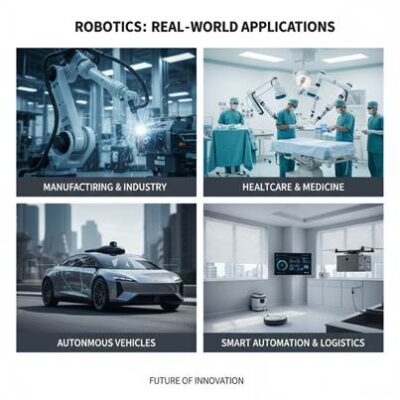
Robotics isn’t just a school activity — it’s reshaping industries. Today, robots are transforming how we live and work across multiple real-world applications:
🌍 Manufacturing & Automation
Robots assemble complex products with precision and efficiency.
🏥 Healthcare
Robotic systems assist in surgeries, rehabilitation, and patient care.
🚗 Transportation
Autonomous vehicles and intelligent systems are redefining mobility.
🛰️ Exploration
Robotic rovers and drones gather data from distant terrains.
Learning robotics equips students with not just technical skills but also the mindset to apply technology in solving everyday challenges and future global problems.
How Robotics Enhances Student Skills
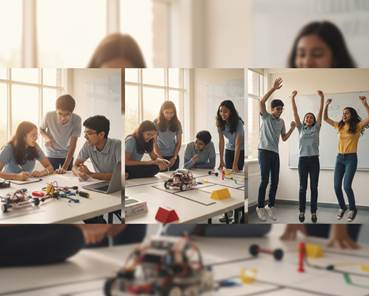
Enrolling in a well-structured robotics program helps students develop a powerful skill set:
📌 Creativity & Innovation
Students design and iterate on robot concepts, learning to think outside the box.
🧠 Critical Thinking & Problem Solving
Students diagnose issues, test solutions, and refine their approaches — invaluable for STEM and any career.
🤝 Teamwork & Collaboration
Working in teams teaches communication, shared planning, and leadership.
💡 Resilience & Adaptability
Mistakes become learning opportunities, building persistence and confidence.
💻 Coding & Technical Literacy
From block-based code to Python logic, students gain real programming experience.
These competencies are in high demand across future industries and are exactly what employers seek in the 21st century.
The Future of Robotics Education
The impact of robotics is expanding rapidly — and so is its role in education.
🧠 AI Integration
Robots are increasingly blended with machine learning and sensors that mimic intelligent behavior, preparing students for cutting-edge technologies.
📊 Robotics in Everyday Life
From automated warehouses to smart homes, robotics is becoming a vital part of daily life and professional workflows.
🏫 Education Ecosystems Embrace Robotics
Schools and governments are adding robotics to curricula to strengthen STEM learning and prepare students for future careers. Recent education initiatives in India are bringing robotics and tech labs into more schools to bridge the digital and skills gap.
As robots continue to integrate with AI, data science, and automation, students with robotics experience will be ready to lead, innovate, and adapt.
Pros and Cons of Robotics Education
✅ Pros
- Builds real technical and soft skills
- Encourages real-world problem solving
- Prepares students for future careers in STEM
- Increases confidence and creativity
⚠️ Cons
- May require time and sustained practice
- Needs supportive facilitators and quality resources
Despite challenges, the benefits far outweigh the costs — especially when programs are hands-on and mentor-led, like at The Wonder Minds.
Frequently Asked Questions (People Also Ask Style)
What age is robotics education suitable for?
Robotics can be introduced from early elementary (K–5) through high school, with age-appropriate complexity.
How does robotics help in real life?
It teaches students design thinking, coding, teamwork, and problem solving — skills applicable in engineering, science, healthcare, and more.
Will learning robotics help with future jobs?
Yes — robotics and related STEM skills are increasingly important for careers in technology, automation, AI, and engineering.
Do kids need prior coding experience to start robotics?
No — many programs start with visual/block coding and progress to advanced text-based coding.
Conclusion: Robotics — A Launchpad for Future Success
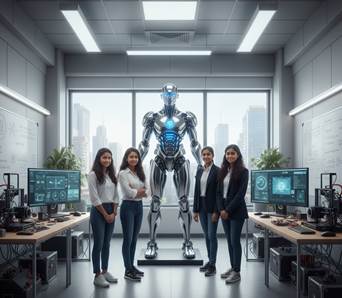
Robotics is more than programming bots — it’s a transformative educational experience that builds real technical skills, fosters creativity and collaboration, and prepares students for a future shaped by innovation.
In a world moving toward automation and intelligent systems, giving students a foundation in robotics education isn’t just smart — it’s essential. If you want your child to think critically, build confidently, and innovate boldly, then robotics is the perfect launchpad to future success.