

Why Learning by Doing Matters More Than Ever
Traditional education has long focused on memorization, lectures, and textbooks. But in today’s fast-evolving world, knowing facts is no longer enough—students must understand, apply, and innovate.
This is where hands-on learning becomes transformative.
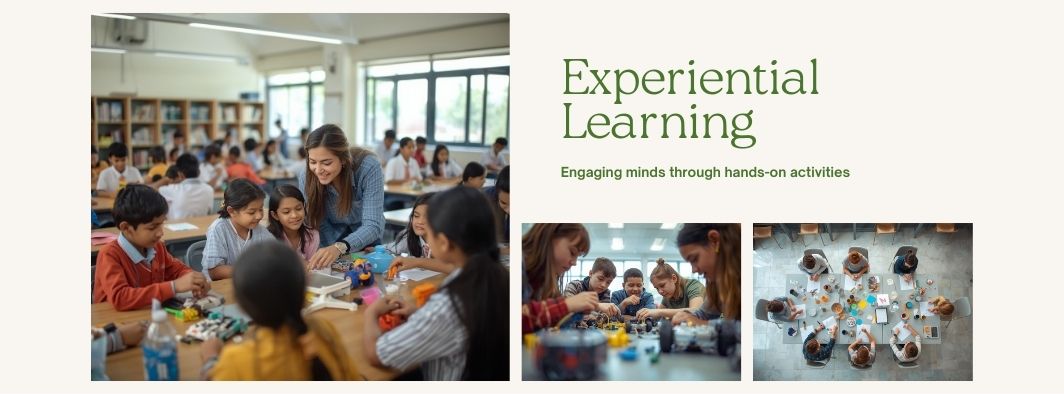
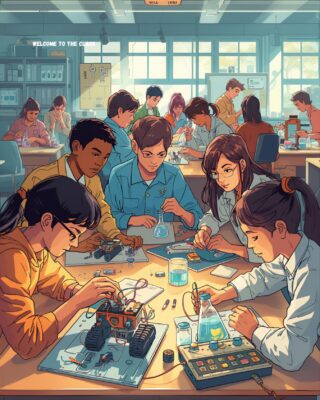
Hands-on learning allows students to actively engage with concepts, explore real-world systems, experiment, and reflect on outcomes. Instead of passively listening, students become creators, problem-solvers, and innovators.
From STEM education and robotics to design thinking and real-world problem solving, hands-on learning is becoming the foundation of future-ready education.
What Is Hands-On Learning?
Learning Through Experience and Exploration
Hands-on learning, also known as experiential or active learning, is an educational approach where students learn by:
- Doing real-world activities
- Experimenting with tools and systems
- Building projects and prototypes
- Solving real problems
- Reflecting on outcomes
Instead of just reading about concepts, students experience them in action.
This approach aligns with modern educational frameworks like NEP 2020, which emphasizes experiential and skill-based learning.
Why Hands-On Learning Is Important for Students
1. Improves Understanding and Retention
Research shows that students remember concepts better when they actively engage with them. Hands-on activities help learners connect theory with practice, making learning meaningful and long-lasting.
2. Builds Critical Thinking and Problem-Solving Skills
When students experiment, they encounter challenges. They must analyze, test, and refine solutions—developing critical thinking and logical reasoning skills.
3. Encourages Creativity and Innovation
Hands-on projects encourage students to think creatively, design solutions, and innovate. This is essential for future careers in technology, science, and entrepreneurship.
4. Enhances Engagement and Motivation
Students are more engaged when learning is interactive. Hands-on activities make learning fun, relevant, and exciting, reducing boredom and increasing participation.
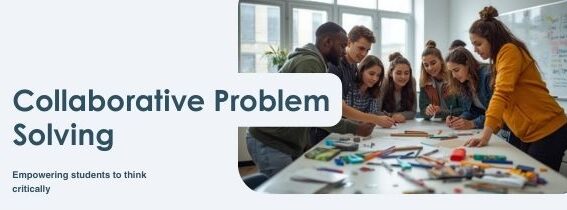
5. Develops Collaboration and Communication
Many hands-on activities are team-based. Students learn to collaborate, share ideas, and communicate effectively—skills that are vital in any profession.
Real-Life Examples of Hands-On Learning
STEM and Robotics Education
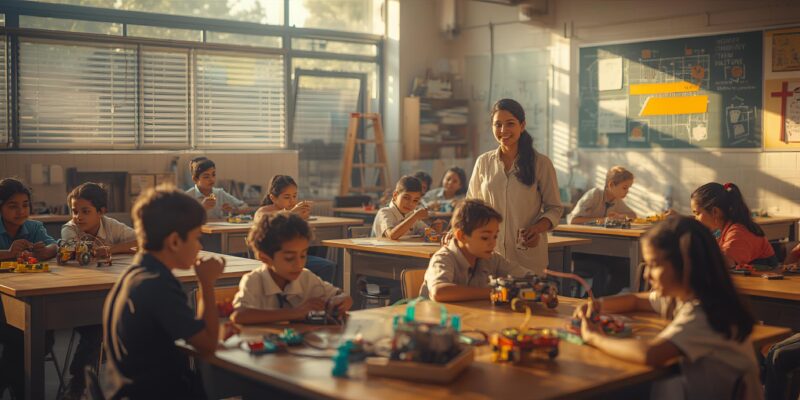
Students build robots, experiment with sensors, and write logic to control machines. This helps them understand engineering, coding, and automation in a real-world context.
Science Experiments and Labs
Instead of memorizing formulas, students conduct experiments to understand scientific principles.
Project-Based Learning (PBL)
Students work on real-world projects, such as designing solutions for environmental or social challenges.
Maker Spaces and Innovation Labs
Students explore tools, electronics, design, and fabrication—turning ideas into prototypes.
These experiences help students connect classroom learning with real-world applications.
How Hands-On Learning Enhances Student Skills

Cognitive Skills
- Critical thinking
- Logical reasoning
- Systems understanding
Innovation & Creativity
- Design thinking
- Problem identification
- Prototyping and iteration
Social & Emotional Skills
- Teamwork and leadership
- Communication and collaboration
- Confidence and resilience
Technical Skills
- Coding and engineering fundamentals
- Data and AI awareness
- Technology literacy
Hands-on learning prepares students not just academically, but holistically for life and careers.
Hands-On Learning vs Traditional Learning
| Traditional Learning | Hands-On Learning |
| Passive listening | Active participation |
| Memorization-based | Understanding-based |
| Theory-focused | Application-focused |
| Individual learning | Collaborative learning |
| Exam-oriented | Skill and real-world oriented |
Hands-on learning shifts education from rote learning to meaningful learning.
Benefits of Hands-On Learning for Schools and Educators
For Schools
- Improves student outcomes and engagement
- Aligns with NEP 2020 experiential learning goals
- Enhances school reputation and innovation profile
- Prepares students for future careers
For Teachers
- Makes teaching interactive and impactful
- Encourages inquiry-based teaching methods
- Helps measure real understanding, not just memorization
Common Mistakes in Implementing Hands-On Learning
❌ Treating It as Extra-Curricular
Hands-on learning should be integrated into the curriculum, not just clubs or competitions.
❌ Focusing Only on Tools
Tools are important, but understanding concepts is more important. The goal is thinking, not just building.
❌ Lack of Reflection
Students must reflect on what they learned to deepen understanding.
❌ No Structured Framework
Hands-on learning needs a structured learning cycle (observe, build, test, improve, reflect) to be effective.
Future Trends in Hands-On Learning
1. Integration with AI and Data Education
Hands-on learning will include AI, data systems, and emerging technologies to prepare students for future industries.
2. Experiential Learning Labs in Schools
More schools are adopting innovation labs, maker spaces, and experiential learning centers.
3. Industry-Aligned Education
Hands-on learning will align with industry needs, bridging the gap between school education and real-world skills.
4. Personalized and Adaptive Learning
Students will explore projects based on interests, enabling deeper engagement and personalized learning paths.
FAQs: People Also Ask
What is hands-on learning in education?
Hands-on learning is an approach where students learn by actively engaging in real-world activities, experiments, and projects instead of passive lectures.
Why is hands-on learning important for students?
It improves understanding, builds critical thinking, enhances creativity, and prepares students for real-world challenges and careers.
How does hands-on learning help in STEM education?
Hands-on learning allows students to experiment with technology, science, and engineering concepts, making abstract ideas tangible and practical.
Is hands-on learning aligned with NEP 2020?
Yes. NEP 2020 strongly promotes experiential and skill-based learning as a core part of modern education.
What are examples of hands-on learning activities?
Examples include robotics projects, science experiments, design challenges, innovation labs, and real-world problem-solving projects.

Conclusion: Learning by Doing Is the Future of Education
Hands-on learning is no longer optional—it is essential.
In a world driven by technology, innovation, and rapid change, students must understand, experiment, and innovate, not just memorize.
By embracing hands-on learning, schools can nurture future-ready thinkers, creators, and leaders who are confident in solving real-world problems.
✅ Strong Actionable Takeaway
If schools want to prepare students for the future, they must move beyond textbooks and adopt experiential, hands-on learning as a core educational approach.